
Abu Dhabi Book Fair Showcases 1,800-Year-Old Homer Manuscript and Historic Treasures
A remarkable collection of rare books, ancient manuscripts and historic artefacts is attracting attention at the Abu Dhabi Book Fair.
The display brings together objects connected to centuries of literature, art and regional history, including an approximately 1,800-year-old fragment of Homer’s Iliad, a 17th-century Bible and a sculpture of Sheikh Zayed’s favourite falcon.
The collection offers visitors and collectors an opportunity to explore valuable pieces of cultural heritage, with some items available for prices reaching hundreds of thousands of euros.
1,800-Year-Old Homer Manuscript Takes Centre Stage
One of the most notable pieces in the collection is a fragment of Homer’s Iliad dating back to the second century.
Written on papyrus, the manuscript provides a connection to the ancient literary tradition associated with the Greek poet Homer.
The fragment is being presented as a significant historical item for institutions and collectors interested in preserving ancient literature.
Ancient Manuscripts Attract Collectors and Institutions
According to the collection’s representative, Yasser Raad, rare manuscript fragments can appeal to museums, libraries and research institutions, as well as private collectors.
Another Homer manuscript fragment is also included in the display, with its asking price reaching hundreds of thousands of euros.
17th-Century Bible Displayed With Gold and Precious Stones
A decorated Bible from the 17th century is another important item at the exhibition.
The book features a gold-plated cover embellished with precious stones and gilded page edges.
The Bible is priced at €65,000 and was reportedly presented as a royal wedding gift before becoming part of a German princess’s library.
A Book With Historical and Artistic Value
The Bible’s cover includes a design featuring two joined hands, symbolising a wedding, along with a cross at the centre.
Its detailed decoration reflects the craftsmanship associated with historic religious books.
The item combines religious significance, artistic design and a documented connection to European royal history.
Japanese Picture Scrolls Tell a Story From 1658
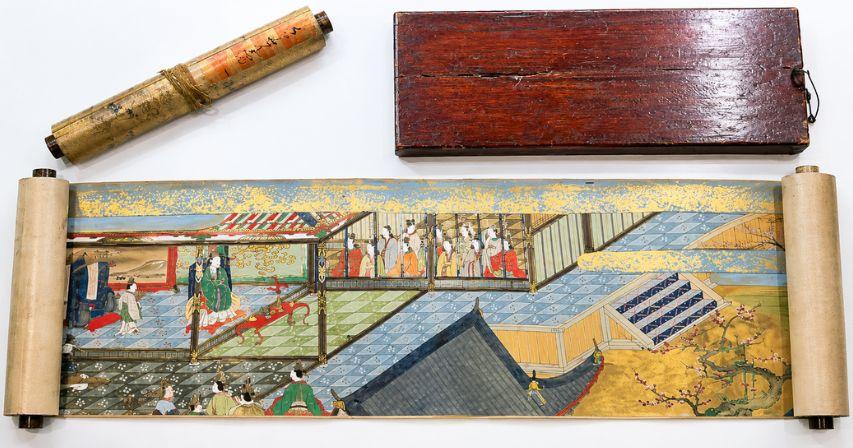
The collection also features five Japanese picture scrolls dating to 1658.
When placed end to end, the scrolls extend approximately nine metres and contain 26 illustrations.
The artwork tells a story involving romance, revenge and war, offering a glimpse into an earlier form of illustrated storytelling.
Rare Scroll Collection Valued at €450,000
The scrolls are priced at €450,000 and include their original storage box, which is decorated with leather and gold details.
The collection demonstrates how historical storytelling was preserved through illustrated manuscripts long before modern cinema and digital entertainment.
Sheikh Zayed’s Favourite Falcon Featured in Sculpture
A sculpture representing Sheikh Zayed’s favourite falcon, known as “No. 1”, adds a distinctive UAE connection to the exhibition.
The life-sized bronze sculpture was created by British wildlife sculptor and painter David Cemmick.
He was invited to Abu Dhabi in 2000, where he studied and painted falcons at Sheikh Zayed’s falconry training ground in Sweihan and his wildlife collection on Sir Bani Yas Island.
Artwork Connects Falconry With UAE Heritage
The sculpture was later cast and hand-painted by Cemmick.
The work is described as a unique artist’s cast.
Its inclusion in the rare collection highlights the importance of falconry in the UAE’s cultural heritage and its connection to Sheikh Zayed’s interests.
Early Photograph Offers a Glimpse Into Gulf History
Another item on display is an early photograph linked to the Gulf region.
The image was taken during the travels of British naval officer Charles Courtenay Bell, who documented his journeys through photography.
One photograph carries the caption “Sheikh of Sharjah”, offering a historical glimpse of the region during the early 20th century.
The collection brings together objects from different periods and places, allowing visitors to explore the connections between literature, art, history and the cultural heritage of the Gulf.
By: Kriti Vaid




Comments