
Dubai Students Develop Project to Turn Plastic Waste into Fuel
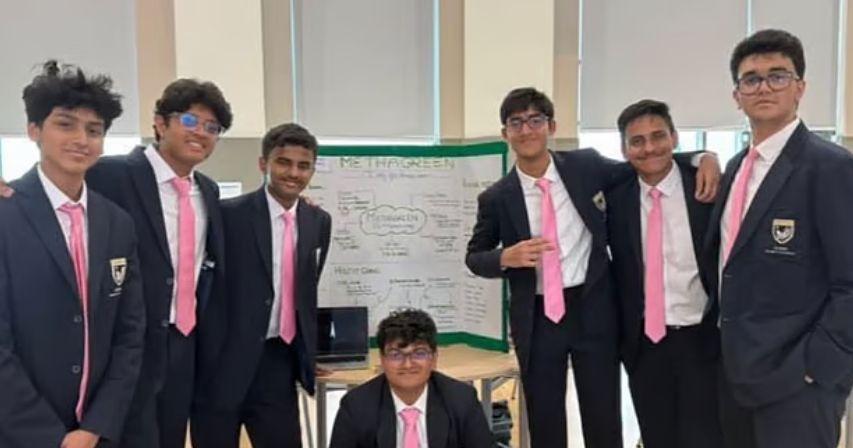
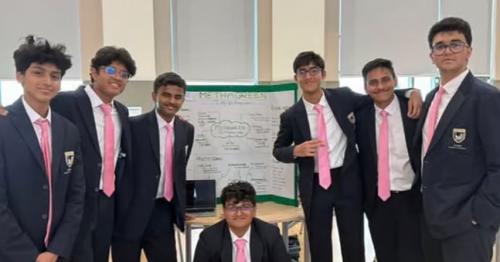
A team of seven Indian high school students in Dubai is developing an innovative project that aims to transform discarded plastic into a potential energy source.
Named Methagreen, the initiative focuses on converting high-density polyethylene (HDPE), commonly found in bottles, containers and packaging, into dimethyl ether (DME), a fuel that could be used for cooking or electricity generation.
The students hope their idea can address plastic pollution while exploring alternative ways to produce energy.
Methagreen Begins with a School Competition
The project started as a school competition entry before gaining wider exposure at sustainability and innovation platforms, including GITEX North Star 2025 and the Zayed Sustainability Prize.
The seven-member team brings together skills in chemistry, design, software development, economics, 3D simulation and marketing.
Co-founder Kiaan Bijin said the students wanted to create something with a meaningful social impact.
Feedback received during competitions has also helped them refine their concept and consider its sustainability, accessibility and commercial potential.
How the Plastic-to-Fuel Process Could Work
The proposed system uses heat and chemical reactions to convert HDPE plastic into fuel.
In the planned process, plastic is first treated to produce methane, which then reacts with carbon dioxide to form synthesis gas, or syngas.
Catalysts would subsequently help convert the gas mixture into DME.
According to the team, the fuel could be used with suitable cooking equipment or compatible generators.
However, the technology remains under development, and its efficiency, emissions and environmental benefits still require practical testing.
Students Plan a Working Prototype
The team’s next major step is to build a small-scale prototype capable of processing around 100 kilograms of HDPE plastic per day after their Grade 12 examinations.
The students plan to use it to gather performance data and identify ways to improve the system.
They also hope to publish a research paper and pursue a patent by mid-2027.
Their preliminary calculations suggest a larger facility processing one tonne of plastic daily could generate significant electricity, although this estimate has yet to be demonstrated through experiments.
Aiming for a More Sustainable Energy Future
Methagreen reflects the students’ ambition to find a practical use for plastic that might otherwise end up in landfills or waterways.
Their proposed approach also explores reusing carbon dioxide during fuel production, although the overall carbon impact must be established through testing.
As the team prepares to move on to university, its members intend to continue developing the project alongside their studies.
For now, building and testing the prototype will be crucial to determining whether the idea can become a reliable waste-to-energy solution.
By: Kriti Vaid


Comments