
Dubai-Sharjah traffic to ease as Al Taawun interchange partially reopens
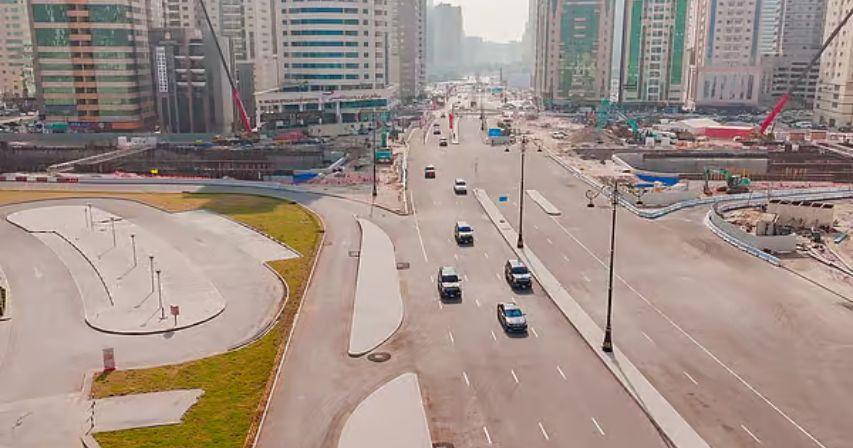
Motorists travelling between Dubai and Sharjah can expect smoother journeys as the first phase of a major road development project opened on Wednesday, November 4. The project aims to improve traffic flow, increase road capacity and provide better connectivity between residential, commercial and industrial areas.
Sharjah Ruler Sheikh Dr Sultan bin Mohammed Al Qasimi inaugurated the first phase, which includes the partial opening of Al Taawun Interchange, along with several bridges and junctions.
First Phase Opens Ahead of Sharjah International Book Fair
The opening coincides with the start of the Sharjah International Book Fair. A one-way route from Sheikh Mohamed bin Zayed Road towards Expo Centre Sharjah is now operational, making it easier for visitors to reach the venue.
Dr Salah bin Butti Al Muhairi, Chairman of the Initiatives Implementation Authority (Mubadara), said the partial opening would help visitors access the book fair while construction continues on the remaining sections of the project.
What to Expect in the Second Phase
The second phase will include the full opening of the upper-level junction at Al Taawun Roundabout and Al Taawun Tunnel. It will also involve completing bridges and junctions along three industrial streets.
Additional improvements will cover Al Khulafa Al Rashideen Interchange and a new bridge connecting it to Jamal Abdul Nasser Street.
Once fully operational, the project is expected to reduce traffic congestion, increase road capacity and offer alternative routes connecting Sharjah's residential, commercial and industrial areas with major roads leading to Dubai.
Five Key Sections of the Road Development Project
The major road development project covers five main sections, including new tunnels, bridges, interchanges and road widening works.
1. Al Taawun Tunnel and Roundabout
The project includes a 560-metre tunnel with three lanes in each direction towards Dubai. It is designed to handle approximately 4,200 vehicles per hour during peak traffic periods.
2. Al Khulafa Al Rashideen Interchange
Two underpasses will provide two additional lanes in each direction. The project also includes a 315-metre bridge connecting the interchange to Jamal Abdul Nasser Street.
These improvements are expected to increase traffic capacity by approximately 2,600 vehicles per hour.
3. First and Second Industrial Streets
The development includes upgraded junctions and two new bridges connecting Damascus Street in Dubai with Wasit Street in Sharjah. These improvements aim to accommodate approximately 2,800 vehicles per hour.
4. Third Industrial Street
New bridges and an underpass will connect the Ring Road, Al Khan Street and surrounding industrial areas, creating a direct route towards Sharjah city centre.
This section is designed to accommodate an additional 5,200 vehicles per hour.
5. Ring Road Widening
The Ring Road will receive two additional lanes towards Sharjah city centre and one additional lane towards Sheikh Mohamed bin Zayed Road.
The development also includes a three-lane turning route from the highway towards the Ring Road to improve traffic movement.
Project Covers More Than 9 Kilometres of Roads
The overall development spans approximately 9.18 kilometres of roads, covering a paved area of 207,265 square metres.
The construction work also includes improvements to service roads, parking areas, entrances and exits. These upgrades aim to make access easier for businesses, commercial establishments and nearby residential communities.
Sharjah Focuses on Improving Road Connectivity
Yousef Khamis Al Othmani, Chairman of the Sharjah Roads and Transport Authority (SRTA), said the project reflects the emirate's continued efforts to develop its road infrastructure in line with urban expansion and residents' requirements.
He highlighted that the benefits of the development extend beyond traffic improvements, as better road connectivity and efficiency can make everyday journeys easier for individuals and families.
Once all phases are completed, the project is expected to provide smoother travel between Sharjah and Dubai, improve access to key destinations and support the emirate's growing transport requirements.
By: Simran




Comments