
Abu Dhabi Professor Develops System to Cut Carbon Emissions and Brine Waste
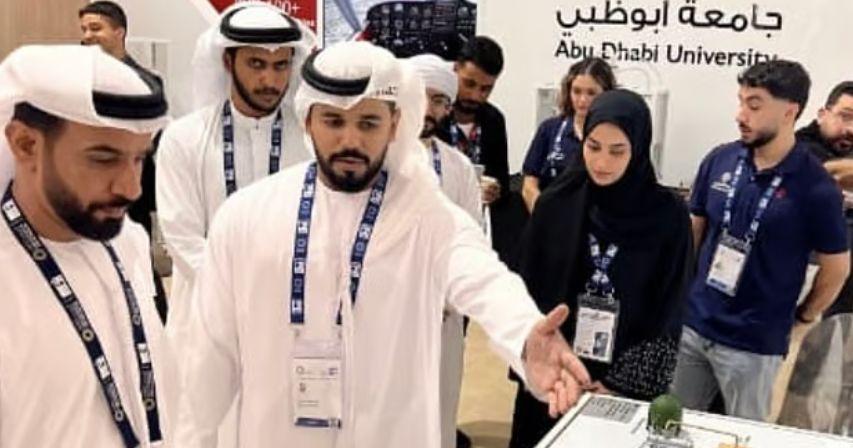
A professor at Abu Dhabi University has developed a patented system designed to address two environmental challenges: carbon dioxide emissions and concentrated saltwater waste from desalination plants.
Professor Omar Chaalal’s invention brings carbon dioxide into contact with brine, encouraging a chemical reaction that converts some of the gas into solid mineral compounds.
The process could offer a new approach to reducing industrial emissions while making desalination waste less salty.
However, the technology has so far been tested only under laboratory conditions.
Laboratory Tests Show Promising Environmental Results
According to the university’s experimental findings, the system achieved a potential reduction of up to 99 per cent in carbon dioxide emissions, while water salinity fell by approximately 40 per cent.
Researchers also reported that up to 28.45 per cent of the material was converted into solid form.
The process, known as mineral carbonation, could help capture carbon while reducing the environmental impact of concentrated brine discharged by desalination facilities.
Further testing will be needed to establish how consistently these results can be achieved outside the laboratory.
Recycling Chemicals Could Support a More Efficient Process
The technology uses ammonia as part of the treatment process, with Chaalal explaining that the chemical is recovered, cleaned and reused.
This closed-loop approach is intended to reduce the need for repeated chemical supplies and limit additional pollution.
If the system proves practical at a larger scale, it could have applications in coastal desalination plants, oil fields and heavy industrial facilities.
Researchers will still need to assess operating costs, environmental impacts and compatibility with existing infrastructure before wider adoption.
UAE Research Looks Towards Commercial Applications
The next stage involves developing modular units that could eventually be used in commercial settings.
The university is exploring industrial partnerships through clean-technology company Global Green Global to help move the invention beyond laboratory research.
The project aligns with the UAE’s broader ambitions to reduce emissions and reach net zero by 2050.
Although the early results are encouraging, large-scale trials will be essential to determine whether the technology can deliver its reported benefits reliably and economically.
By: Kriti Vaid



Comments