
UAE Scientists Head to the Poles to Study Climate Change
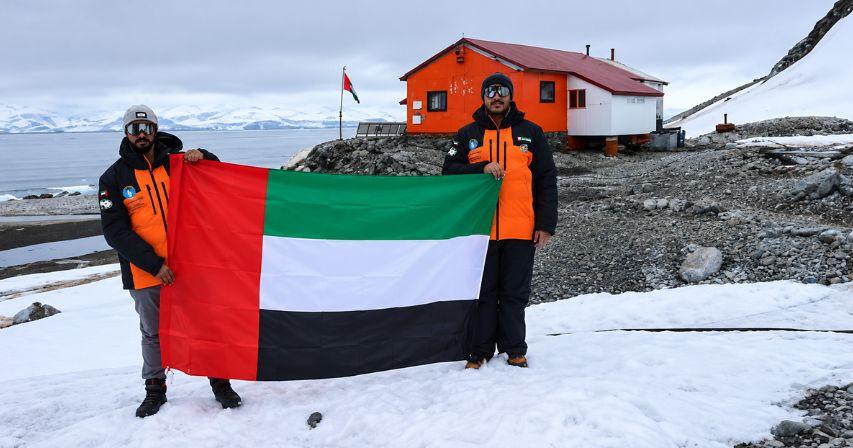
The UAE is expanding its research into some of the world’s most extreme environments, with researchers studying the Arctic and Antarctica to better understand climate and environmental changes.
The Emirates Polar Program has supported UAE scientists in expeditions and international research projects across the polar regions.
The country’s polar research efforts focus on areas including climate science, atmospheric conditions, ocean systems, ice and environmental changes.
Recent UAE-led research has also included an Arctic study in Svalbard examining climate records dating back more than 230 million years.
Why the UAE Is Studying the Polar Regions
Although the Arctic and Antarctica are far from the UAE, changes in these regions can provide important information about the Earth’s wider climate system.
Scientists study ice, oceans, atmospheric conditions and other environmental indicators to understand how the planet is changing.
For UAE researchers, polar expeditions provide an opportunity to collect data in environments that play an important role in global climate research.
Polar Research Can Help Track Climate Changes
Researchers use observations from polar regions to examine changes in ice, weather, oceans and the atmosphere.
This information can contribute to scientific models and help researchers study long-term environmental trends.
UAE Researchers Work on Arctic and Antarctic Projects
The Emirates Polar Program brings together research, field expeditions and international cooperation.
UAE researchers have participated in projects involving meteorology, atmospheric science, environmental monitoring, ocean research and polar geophysics.
In 2026, a Khalifa University research team carried out the UAE’s first on-site Arctic geological study in Svalbard.
The researchers examined rock cores containing evidence of climate changes from Earth’s distant past.
New Antarctic Research Facilities
The UAE’s Antarctic programme has also expanded.
During the 2025–2026 expedition, UAE scientists established laboratories at the Bulgarian Antarctic Base on Livingston Island and installed and maintained climate monitoring equipment.
The facilities are intended to support research into atmospheric science, environmental change, ocean science and polar geophysics.
Monitoring Weather, Ice and Seismic Activity
UAE researchers have been involved in collecting data on weather conditions and seismic activity in Antarctica.
Earlier expeditions included the installation of seismic stations to record environmental conditions and movements within the region.
The collected information can be analysed over time to identify patterns in weather, ice and other environmental conditions.
International Cooperation in Polar Science
International partnerships are an important part of the UAE’s polar research programme.
The country works with universities, scientific institutions and international polar research organisations to conduct field studies and share knowledge.
The UAE has also expanded its participation in polar frameworks, including accession to the Antarctic Treaty System and observer status with the Arctic Council.
UAE’s Growing Role in Global Climate Research
The expansion of polar research adds another dimension to the UAE’s scientific activities.
From the country’s desert environment to the Arctic and Antarctic, UAE researchers are collecting data and collaborating with international teams to investigate environmental changes across the planet.
With expeditions, research facilities and academic partnerships, the Emirates Polar Program is continuing to develop the UAE’s involvement in polar science and climate research.
By: Kriti Vaid




Comments