
Abu Dhabi summit brings global university leaders together to discuss future skills and AI
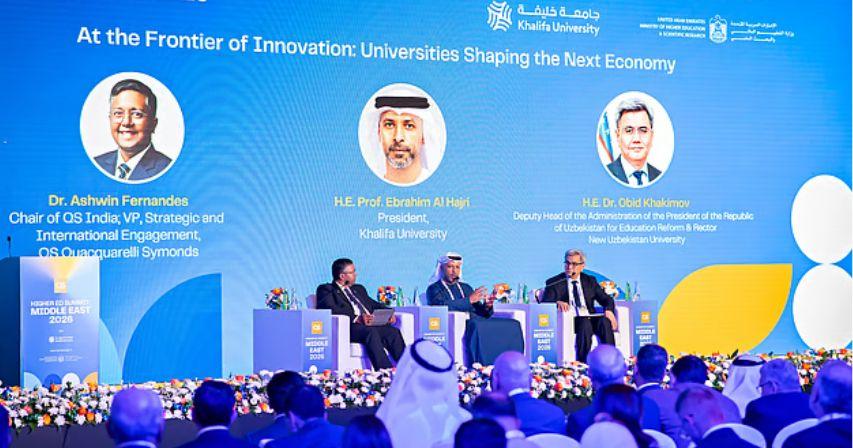
Abu Dhabi: More than 400 higher education leaders, policymakers, researchers and industry representatives have gathered in Abu Dhabi for the QS Higher Ed Summit: Middle East 2026 to discuss the future of education, workforce development and technology-driven economies.
Held under the patronage of the UAE Ministry of Higher Education and Scientific Research, the three-day summit opened on Sunday at The Ritz-Carlton Abu Dhabi, Grand Canal, and will continue until November 24.
The event is hosted by Khalifa University of Science and Technology and organised by Quacquarelli Symonds (QS). It aims to explore how universities can strengthen education, research and industry partnerships to prepare graduates for changing employment demands.
QS Higher Ed Summit 2026 Focuses on the Future of Work
The summit is themed 'Future-Ready Universities. Future-Ready Economies' and addresses the growing impact of artificial intelligence, technological advancements and changing workplace requirements on education.
The opening ceremony was attended by Mohamed Taj Eddine Ahmed Alqadi, chairman of the Abu Dhabi Department of Education and Knowledge (ADEK); Professor Ebrahim Al Hajri, president of Khalifa University; and senior representatives from QS and the international higher education community.
Dr Abdulrahman Al Awar, Minister of Human Resources and Emiratisation and Acting Minister of Higher Education and Scientific Research, highlighted the importance of universities in preparing graduates for future employment opportunities.
He said the UAE was working to strengthen connections between higher education, skills development, research and employment to ensure graduates develop the capabilities needed in changing economies.
He also highlighted the summit's role in encouraging universities and employers to exchange knowledge, establish partnerships and explore how artificial intelligence and innovation can improve education.
Abu Dhabi Focuses on Developing Future-Ready Talent
Mohamed Alqadi, chairman of ADEK, emphasised that developing skilled talent remains a priority as Abu Dhabi continues to expand its economy and strengthen its global position.
He highlighted the importance of collaboration across the education system in helping students identify career opportunities, develop their abilities and contribute to the emirate's long-term growth.
Professor Ebrahim Al Hajri welcomed delegates and highlighted Abu Dhabi's growing role in research, innovation and talent development.
He noted that universities bring together talent, knowledge and opportunities, helping societies respond to emerging challenges while supporting sustainable economic growth.
Dr Ashwin Fernandes, chair of QS India and vice-president of strategic and international engagement, also highlighted the contribution of UAE universities to innovation and economic transformation.
He said the discussions would explore how higher education institutions could support national priorities, advance research and prepare graduates for an economy increasingly influenced by artificial intelligence.
AI, Industry Partnerships and Skills Development Take Centre Stage
The opening ceremony also featured Jason Newman, chief commercial officer of QS, and Professor Ghassan Aouad, chair of the QS Global Advisory Committee for the Middle East and chancellor of Abu Dhabi University.
Throughout the three-day event, participants will take part in panel discussions, keynote speeches and workshops covering several important developments in higher education.
Key discussion areas include:
Artificial Intelligence in Education: Exploring how AI is transforming teaching, learning and academic research.
Future Workforce Skills: Preparing graduates for changing employment requirements and technology-driven workplaces.
University-Industry Partnerships: Strengthening collaboration between educational institutions, businesses and government organisations.
Lifelong Learning: Encouraging continuous education through professional development and specialised training.
Short Courses and Certifications: Examining the growing role of professional certificates and flexible learning programmes.
Leadership Development: Identifying the leadership capabilities universities need to adapt to changing economic conditions.
The summit will also examine developments in graduate management education and how universities can better align their academic programmes with industry expectations.
Khalifa University Highlights Its Role in Education and Innovation
Khalifa University's hosting of the QS Higher Ed Summit: Middle East 2026 reflects its commitment to connecting higher education and research with innovation, industry collaboration and national development priorities.
By bringing together international education leaders, government representatives and industry experts, the summit aims to encourage new partnerships and practical approaches to developing future-ready graduates.
The discussions are expected to highlight how universities across the Middle East can adapt to technological changes, strengthen research capabilities and contribute to sustainable economic growth.
By: Simran



Comments