
UAE Calls for Peaceful Settlement of Dispute Over Three Islands Occupied by Iran
The United Arab Emirates (UAE) has once again called for a peaceful resolution to its decades-old dispute with Iran over three Gulf islands that remain under Iranian control.
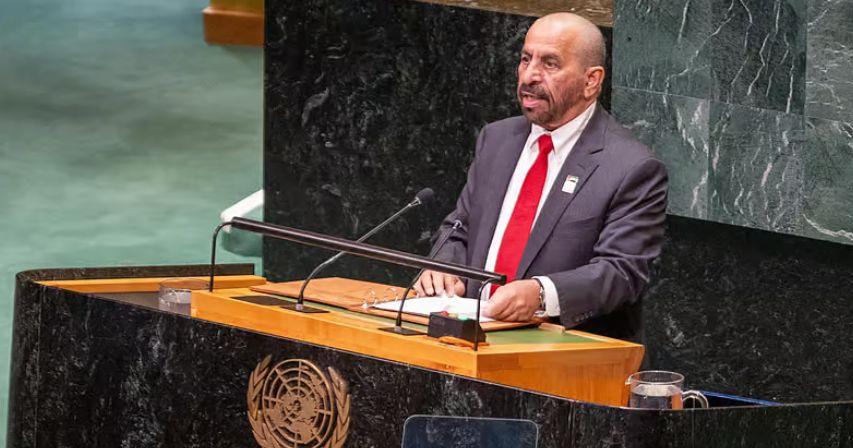
The UAE raised the issue during the high-level general debate of the 81st session of the United Nations General Assembly.
UAE Minister of State Khalifa Shaheen Al Marar outlined the country's position on the dispute while also addressing several other regional and international issues.
The UAE called for the dispute to be resolved through peaceful means, either through direct negotiations or by referring the matter to the International Court of Justice (ICJ).
UAE Reaffirms Position on Three Islands
The three islands of Greater Tunb, Lesser Tunb and Abu Musa have remained at the centre of a long-running territorial dispute between the UAE and Iran.
According to the UAE's position, Iranian troops took control of the islands on November 30, 1971, shortly before the formation of the United Arab Emirates.
In December 1971, the UAE brought the issue before the United Nations Security Council.
The UAE has continued to reiterate its position on the dispute, pointing to historical documents that it says support its claim over the islands.
The country has consistently maintained that the issue should be addressed through peaceful negotiations and diplomatic channels.
UAE Calls for Diplomacy and Dialogue
In his address, Al Marar placed the three-island dispute within the broader framework of the UAE's foreign policy, which focuses on de-escalation, dialogue, negotiations and peaceful settlement of disputes.
He also highlighted the UAE's commitment to respecting national sovereignty, international law, the UN Charter and the principles of good-neighbourly relations.
Rather than seeking further escalation, the UAE has called for negotiations to resolve the dispute and reiterated its readiness to take the matter to the International Court of Justice.
UAE Outlines Wider Foreign Policy Priorities
During the UN meeting, Al Marar also discussed the UAE's broader foreign policy priorities.
Alongside the three-island dispute, he addressed several conflicts and humanitarian challenges in different parts of the world.
On the Palestinian issue, the UAE reiterated its support for a two-state solution and continued diplomatic efforts aimed at reducing tensions and supporting regional stability.
Focus on Sudan, Yemen and Libya
The UAE also called for a permanent ceasefire in Sudan and supported a civilian-led political transition. It further expressed support for political solutions to conflicts in Yemen and Libya.
The UAE has also highlighted its involvement in diplomatic and mediation efforts concerning several international conflicts, including the war between Russia and Ukraine.
UAE Maintains Focus on Development
Despite the challenges facing the international community, the UAE continues to identify economic development, infrastructure, technology, healthcare and education as important national priorities.
The country's wider foreign-policy approach places emphasis on diplomacy, dialogue, international cooperation and efforts to reduce regional tensions.
What Happens Next?
The UAE continues to seek a peaceful resolution to its long-standing dispute with Iran over Greater Tunb, Lesser Tunb and Abu Musa.
At the United Nations, the UAE once again reaffirmed its position on the issue and stressed that the dispute should be addressed through peaceful and diplomatic means.
The UAE has called for direct negotiations with Iran and has also expressed its willingness to pursue a legal resolution through the International Court of Justice.
By: Kriti Vaid



Comments