
Are crash axes required on every flight? What UAE law says
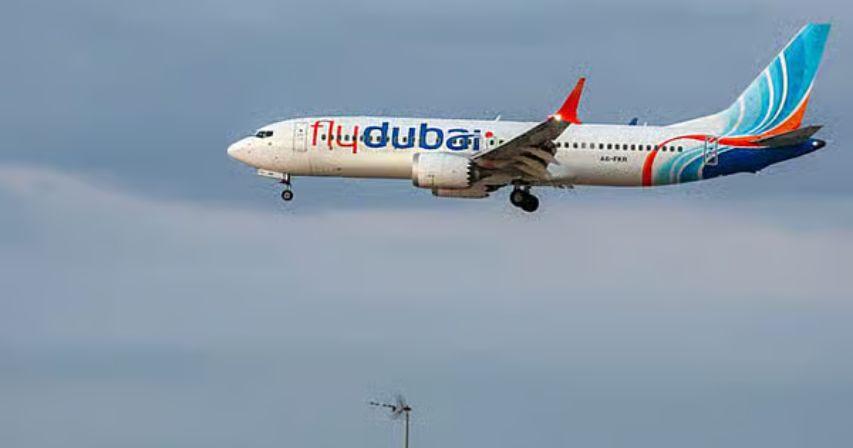
The crash axe used during the September 30 incident involving flydubai flight FZ1073 has raised questions about how such a tool was available inside the aircraft.
The Dubai-to-Tel Aviv flight was diverted to Saudi Arabia's Tabuk Airport after an altercation involving the co-pilot and captain. UAE authorities later said the co-pilot attempted to carry out a “terrorist act” and assaulted the captain with a crash axe.
However, the axe itself was not an unauthorised weapon brought onto the aircraft. It was an emergency safety tool required under aviation regulations.
What Is a Crash Axe Used For?
A crash axe is a safety tool carried on certain aircraft for use during emergencies. It can help crew members break through windows, doors or aircraft panels when access or escape is required.
Although it can be dangerous if misused, its presence on an aircraft is part of standard emergency equipment requirements.
Which Aircraft Need a Crash Axe Under UAE Rules?
According to the UAE General Civil Aviation Authority (GCAA) regulations updated in 2025, an aeroplane must carry at least one crash axe or crowbar if it meets either of the following conditions:
-
It has a Maximum Certified Take-off Mass (MCTOM) above 5,700kg
-
It has a Maximum Operational Passenger Seating Configuration (MOPSC) above nine passengers
The equipment must normally be kept in the flight crew compartment.
For aircraft with an MOPSC of more than 200 passengers, an additional crash axe or crowbar must be installed in or near the rearmost galley.
If a crash axe or crowbar is located in the passenger compartment, it should not be visible to passengers, according to the GCAA regulations.
Was a Crash Axe Required on Flydubai FZ1073?
Yes.
The FZ1073 flight carried 174 passengers from Dubai to Tel Aviv, meaning it exceeded the passenger threshold specified under the GCAA regulations.
Flydubai operates Boeing 737 aircraft, including the Next-Generation Boeing 737-800, Boeing 737 MAX 8 and Boeing 737 MAX 9.
All of these aircraft have a Maximum Certified Take-off Mass significantly above the 5,700kg threshold:
Boeing 737-800: 79,010kg
Boeing 737 MAX 8: 82,640kg
Boeing 737 MAX 9: 88,310kg
Therefore, the aircraft was required to carry a crash axe or crowbar as part of its emergency equipment.
What Happened During the FZ1073 Incident?
Flydubai initially described the situation as an “incident” that resulted in the Dubai-Tel Aviv flight being diverted to Tabuk Airport in Saudi Arabia. The airline later said an “altercation” had taken place on board.
All passengers were accounted for, and flydubai arranged replacement aircraft to transport them.
The UAE's General Civil Aviation Authority said the security incident had been brought under control and that some crew members had been injured and taken to hospital in Saudi Arabia.
The airline subsequently suspended its flights to Israel, while Emirates also suspended its codeshare services with flydubai to and from Tel Aviv.
Investigation Into the Co-Pilot
On October 1, UAE Attorney-General Counsellor Dr Hamad Saif Al Shamsi ordered the formation of a specialised investigation team from the Public Prosecution to examine the incident.
Saudi authorities, working with a UAE security team, said preliminary investigations indicated that the co-pilot had assaulted the captain, leaving both injured.
The injured captain was identified as Indian national Captain Smit Machchhar. India's ambassador to the UAE, Deepak Mittal, later visited the pilot and his family, with the Indian embassy confirming that he was recovering well.
Pilot Praised for Saving Passengers
After the incident, Captain Machchhar spoke with Indian Prime Minister Narendra Modi and described how he managed to open the cockpit door despite being injured.
He said he could not allow the passengers to die.
UAE presidential diplomatic adviser Anwar Gargash praised the pilot's actions, describing him as a hero who demonstrated courage and responsibility during the dangerous incident.
Flydubai CEO Ghaith Al Ghaith also expressed gratitude to the captain, crew and passengers who helped secure the aircraft and ensure its safe landing.
UAE Investigation Labels Incident a Terrorist Act
On October 3, the UAE investigation concluded that the co-pilot had attempted to carry out a “terrorist act”.
According to the UAE Attorney General, the co-pilot launched the attack while the aircraft was in flight, assaulting the captain inside the cockpit with a crash axe and attempting to take control of the aircraft.
Authorities stressed that the investigation remains ongoing and that further work is required to establish the motive and determine whether there were any related connections.
Final findings will be announced after the necessary investigative and legal procedures are completed.
Dubai Crown Prince Visits Injured Pilot
Dubai Crown Prince Sheikh Hamdan bin Mohammed bin Rashid Al Maktoum later visited the injured flydubai pilot.
He praised the captain for demonstrating the highest levels of courage, responsibility and concern for the lives of those on board, describing his actions as a source of pride for the UAE.
The incident has highlighted why crash axes are carried on commercial aircraft—and how an emergency safety tool can become central to an investigation when it is used for an entirely different purpose.




Comments