
UAE: Local production of medicines, vaccines key to addressing pandemic challenges
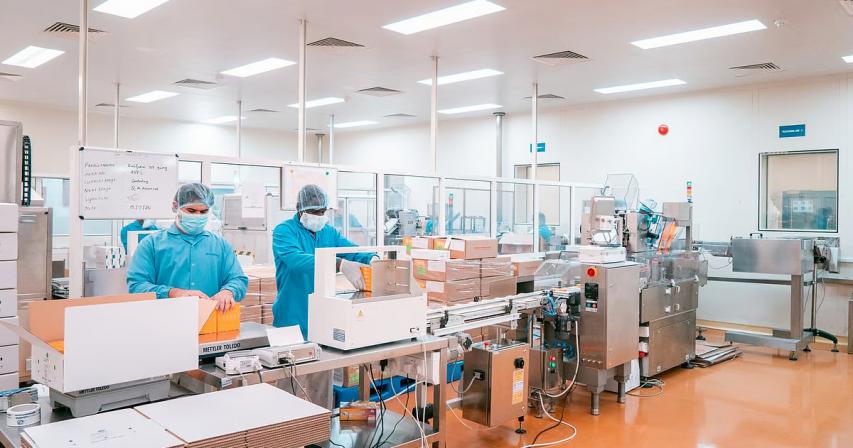
Local production of health products is a vital path towards achieving health equity, and preparedness for pandemics, said World Health Organisation (WHO) Director-General Dr Tedros Adhanom Ghebreyesus in an address delivered on Monday.
The gap exposed by Covid-19 pandemic was not only highlighted by Dr Tedros, who called for urgent global action to scale up local production of health products.
In a video address to the third World Local Production Forum 2025 in Abu Dhabi on the occasion of World Health Day and the 77th anniversary of the World Health Organisation (WHO), he highlighted the inequitable access to vaccines and medical supplies, stemming from the concentration of manufacturing in only a few countries.
He said that the pandemic accord would "overcome the shortcomings of the Covid-19 pandemic and the lessons learnt – or not learnt – from it," referring to the still-ongoing Geneva negotiations.
Dr Tedros stressed that local manufacturing is not only essential for responding to a pandemic but also a major step towards realising a human right. Equitable access. “The right to health is: the right to equitable access to the products to protect and promote health. What you get wrong is the local production,' " he added.
Four key recommendations
WHO has not stopped decentralising production, noted Dr Tedros, also referring to the mRNA technology transfer hub in South Africa, which has recently begun disseminating its expertise to 15 partner countries. Upon that was also referenced the bio-manufacturing workforce training program that is available in south Korea, which has trained over 7000 individuals globally.
Even with considerable efforts in this area, Dr Tedros said, "we acknowledge the major challenges low and middle-income have in accessing affordable financing and to progress their research and development capacity.
To counter these elements,Dr Tedros detailed four main oblasti.
He said: "Start by building on the use of local ecosystems for production - technological transfer, data sharing, strengthening of regulator and so on. Second, leverage digital technologies: drive the end-to-end production bio chain via AI and big data, from research to medicine distribution.
Third, greening local making by adopting energy efficient technologies and sustainable sourcing of raw materials and fourth working across sectors to create public-private partnerships to scale investment in R&D, manufacturing, infrastructure and workforce capacity, he said.
Act without delay
He also called on all stakeholders — governments, industries and global institutions — to step up and step up now. The pandemic agreement is expected to take a few years to be finalized, but Khemani said that is no excuse to delay action now.
He reminded the attendees that the WHO Constitution adopted on April 7, 1948 was the first international law to recognize health as a human right — a mission that is just as critical today as it was 77 years ago.
Without local production, supports for global pandemic preparedness and response will be hollow, said Dr Tedros, who noted the world is not only facing new threats but also old enemies like Ebola, mpox, malaria and tuberculosis.




Comments