
UAE: Best, worst government department rankings not meant to name and shame
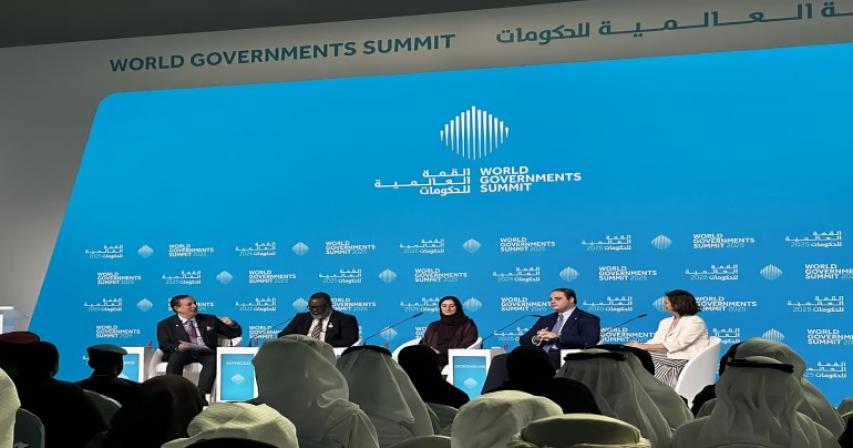
A top official stated that the UAE government department rankings do not aim to single out departments for criticism. All emirates are driven to achieve excellence through their “long-standing commitment to progress.”
Huda Al Hashimi, Deputy Minister of Cabinet Affairs for Strategic Affairs at the Prime Minister's Office, explained that this philosophy has served as the UAE's leadership principle for more than two decades.
On Sunday the UAE's Vice President Sheikh Mohammed bin Rashid released the results of the bureaucracy removal initiative which classified government departments by their performance throughout the country.
The Ministries of Justice, Foreign Affairs, and Energy and Infrastructure led the rankings while Emirates Post, General Pension and Social Security Authority and Ministry of Sports were placed at the bottom for their performance in reducing bureaucracy.
At Dubai's World Governments Summit Al Hashimi revealed this system might surprise attendees but explained that their team has implemented this philosophy for two decades.
She emphasized Sheikh Mohammed's commitment to quality awards since the 1990s as part of his historical practices to build an environment of ongoing improvement. "It's not about shaming them," she clarified. "It's about what more can be done.”
As he announced the results, Sheikh Mohammed, who is also Prime Minister of the UAE and Ruler of Dubai, had a word of advice for entities that came in the bottom three: Government bureaucracies can rapidly transform their flawed systems through decisive and courageous actions executed within days.
The UAE Vice-President has made public declarations about performance evaluations of government organizations while repeatedly pointing out those that performed poorly.
Al Hashimi explained that government entities working together can drive progress through active support from high-performing organizations to help those facing difficulties. The team opted to exchange their experiences and strategies instead of hiring consultants.
Entities that performed poorly initially achieved top rankings in later assessments through this shared commitment to collaboration. She confirmed that the government remains dedicated to advancing excellence because "Our people deserve it."
The Zero Government Bureaucracy programme directed ministries and government entities to eliminate at least 2,000 government procedures and decrease process time requirements by half.
Al Hashimi examined the initiative due to its implications during the Covid-19 pandemic. The crisis required governments around the globe to reassess their operational procedures and make efficiency their main focus. The implementation of e-government and e-education systems moved forward rapidly during her assessment.
The government adopted a zero-bureaucracy approach because the pandemic served as a turning point to boost responsiveness and effectiveness.
"The call was clear: She argued that innovation requires leaders to reassess all aspects of their operations without presumptions.
The UAE has maintained a national priority status for digital transformation and service quality for decades which now leads to the development of anticipatory needs-based governance that ensures services are delivered before requests arise.
Al Hashimi made clear the necessity for partnerships between public and private entities. The initial meeting following the launch of the zero-government bureaucracy initiative brought together the Chambers of Commerce to establish priority areas for enhancement through collaborative design. She remarked that thousands of meetings occurred which demonstrated the thorough public engagement essential for the reforms to address their needs.





Comments