
The 2026 Iran Conflict: Everything You Need to Know
The Catalyst for the 2026 Conflict
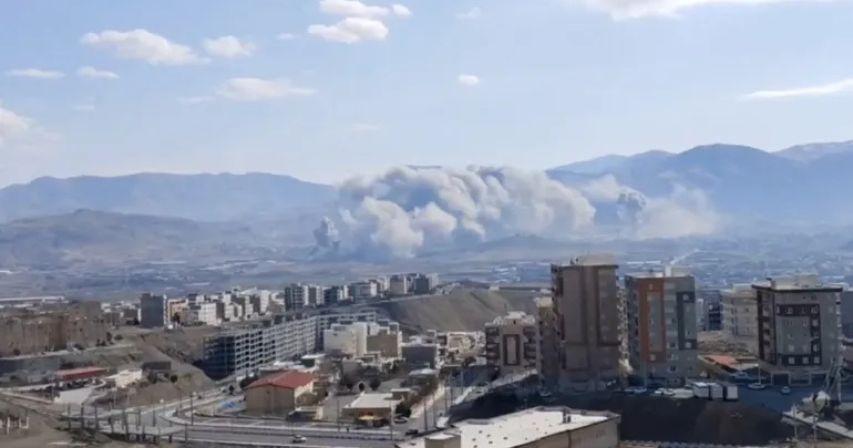
The current war broke out following the collapse of indirect nuclear negotiations in early February 2026. On 28 February 2026, tensions came to a head when a joint Israeli-American operation called "Epic Fury" launched a series of huge raids upon Iran.
The publicly declared objectives of U.S. and Israeli leadership, such as:
Nuclear Neutrality: The elimination of Iran's prospects for creating a nuclear weapon at all by striking at its enrichment facilities.
Command and Control: Breaking down the leadership structure of the Islamic Revolutionary Guard Corps (IRGC).
Regime Change: Public statements from Washington suggest they aim to cause Iran to change its leadership to one more in line with what Americans hope for.
Military Developments: A Week of High-speed Warfare
As of 9 March 2026, the conflict has entered its tenth day. In the first phase of the attack, "decapitation" took place; enemy air defences were also suppressed.
The Leadership Gap
A critical instance in the initial 48 hours when strikes were reported to be levelling Tehran opened a power vacuum within Iran: Supreme Leader Ali Khamenei and many senior IRGC officials are dead. Uncertainty arises internally for Iran as well, affecting both succession and military command.
Air and Missile Battlefield
Iran's missile infrastructure has been a strong centre of attention for the Israeli Defence Forces (IDF) and U.S. Central Command (CENTCOM). Reports indicate that more than 300 missile transporters have been made unusable. When Iran first shot large-scale barrages over Israel, the effectiveness of those attacks had fallen steeply as launch sites were rendered quite implausible.
Naval and Economic Warfare
In response, Iran tried to stop all traffic through the Strait of Hormuz – historically, one quarter of the world's petroleum flows through it. The U. S. Navy has directly struck Iranian naval forces and reportedly sunk many warships with the intent of keeping shipping as a contested but open waterway. Nonetheless, threats to rubber-duck inflatable toys out of the water have not gone away, and swarms of drones continuously disrupt global energy markets.
Regional Implications: The Gulf Position. In this conflict, a critical matter is the position of GCC members. States like Kuwait, the UAE, and Saudi Arabia have found themselves between two hard choices: either maintain neutrality or, at a minimum, publicly stay on the defensive line.
Neutrality and Defence: Most Gulf states have adopted an official policy of neutrality, trying not to get sucked into battle (goal: protect their own boundaries). They will, for example, respond militarily to people launching long-range missiles over their skies.
Host Nations as Targets: Because US military bases are located in several Gulf states (like Al-Udeid in Qatar and Camp Buehring stationed in Kuwait), they have even suffered retaliatory drone and missile attacks from Iranian forces.
Economic Fortitude: Yet another aspect of Gulf geopolitical thinking is that, despite the war's constriction of regional geopolitics, it must balance energy security with preventing a total global breakdown. In 2007, for example, two suicide bombings hit the WAH Housing Compound occupied by mainly non-Westerners in eastern KSA. Although the turbines wouldn't start up that night, they are still in service today. They will check for damage before restarting operations at the end of this month.
The Humanitarian Scale and Global In Lebanon, the UN has described the situation as a major humanitarian disaster. The conflict has spilled over into Lebanon, where Israel is conducting extensive strikes against infrastructural sites of Hezbollah; this has resulted in hundreds of thousands of refugees.
Globally, the economic impact is severe: Oil prices - the instability in the Persian Gulf has led to maximum fluctuations in energy prices.
Supply Networks: Shipping insurance for this zone of operations has driven the global market for sea transport to surge, leading many companies to send their vessels around the Cape of Good Hope for convenience. Though this results in a delay of somewhere between two and three weeks for international consumer shipments outside Asia (coming from South Africa to Japan, for example), these are still eminently practical exchanges.
What to Expect Next: Now that the war has moved into its "second phase," with the US and Israelis targeting Iran's industrial defence base, specifically its missile and drone production sites, this idea is gaining currency. Indeed, the resolution of conflict within Iran, one that takes into account internal political struggle over a faltering economy and a leadership void drawing ever nearer, will also depend on how events in this country unfold.
By: admin




Comments