
Kids’ screen time surges during war, raising anxiety levels
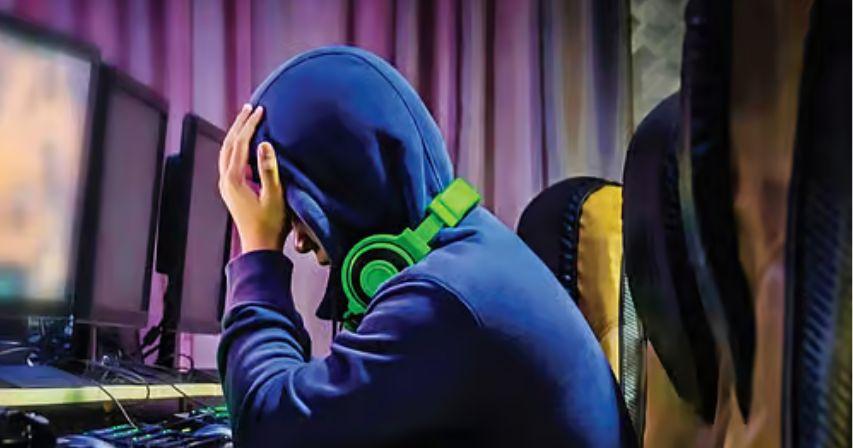
The children’s screen time has increased sharply across the Gulf region and globally during a month-long US-Israel-Iran war, shows data compiled from international health organisations, academic research institutions and regulatory bodies.
Although country specific data from telecommunications providers is proprietary, publicly available research in March 2023 sets clear baseline correlations to illuminate the pattern that ranks among the most rapid documented rises recorded of youth digital consumption during any geopolitical crisis.
“The US-Israel-Iran war, which broke out on February 28, has pushed pre-existing trends to crisis levels,” said Dubai-based analyst Rayad Kamal Ayub, adding:
“We are witnessing persistent algorithmically driven engagement with emotionally heated content that goes beyond anything recorded during past regional catastrophes.
Ayub cited documentation by the Reuters Institute for the Study of Journalism at Oxford University that identified at least 47 instances in just the first three weeks of March 2026 where AI-generated conflict content had spread across major platforms.
“The institute’s analysis determined that synthetic media content received about 340 per cent more engagement than truthful journalistic reporting of the same events – a gap that researchers trace to the emotional intensity and visual drama of falsified material,” he said, adding: “These dynamics have led researchers to describe this process as engagement acceleration, a vicious cycle where initial interest in crises leads to algorithmically-facilitated provisioning of more intense materials which ultimately prolongs session size and frequency.
What about this trend is so alarming?
A study by the OECD (Organisation for Economic Co-operation and Development) last year indicated that children who spend more than two hours a day on social media experience 41 per cent higher levels of sleep disruption and 34 per cent heightened anxiety. A Pew Research Center report in 2025 documented that 46 per cent of teenagers claim to use social media nearly constantly. The average adolescent gets 237 notifications a day, according to Common Sense Media.
Clinical data collected by the mental health organisations also show associations between increased screen time and psychological distress among young users in periods of conflict.
The World Health Organisation (WHO) stated in guidance published on March 18 that “excessive social media use during periods of conflict is a significant mental health risk factor for children and adolescents”, based on evidence that levels of anxiety, sleep disturbance, and symptoms of trauma response are elevated in young users regardless of connection to specific conflict zones.
The UN International Children’s Emergency Fund (Unicef) similarly warned that exposure over time to unverified, emotionally charged information at crucial developmental times can create permanent shortfalls in critical thinking ability, institutional trust and evidence based reasoning. Other effects are sleep disruption, anxiety disorders, depression and poorer academic performance.”
Adding fuel to the fire is the increasing exposure of children to misinformation, false or manipulated content, which circulates as much as six times faster than verified reporting via major social platforms in cases of breaking news.
“Algorithmic recommendation systems tend to overemphasize attention-seeking, unverified content owing to their higher engagement metrics,” said Ayub, who also serves as the managing director of UAE-based Rayad Group.
He bases this on a 2024 study reported in Nature Human Behavior finding that emotionally charged content gets 2.7 times as much algorithmic amplification as neutral material; so the answer is yes. A 2025 analysis by the MIT (Massachusetts Institute of Technology) Media Lab further demonstrated that during crisis periods, conflict-oriented content would spread six times more quickly than verified news reporting.
How are authorities responding?
This perceivable uptick in the conflict content consumed by children has led to coordinated action globally through regulatory regimes.
Australia’s eSafety Commissioner launched formal investigations on March 22 of five major platforms for failing to comply with Under-16 access restrictions. Possible penalties for violations are more than 50 million Australian dollars.
France’s National Assembly held a debate on March 15 over legislation that would prohibit children under the age of 15 from accessing social media without explicit parental permission. This is supported through compulsory age verification systems.
On March 28, the European Commission revealed it is speeding up enforcement actions based on violations of the Digital Services Act by platforms in their duty to protect minors from harmful content.
The new measures, put in place under emergency restrictions by Indonesia starting March 20, no longer allow platforms to provide content until that service verifies users’ age and gets parental consent for anyone under the age of 16 years.
Austria's parliament on March 24 approved legislation restricting social media access to users under the age of 14 that is set to take effect no later than June 2026.
Parallel actions in the USThe Royal Alliance in WashingtonMoreover a coalition of 34 bipartisan senators signed March 27 a letter to the Federal Trade Commission calling for immediate enforcement actions against child safety violations encouraging voluntary compliance failures, citing the US-Israel-Iran war as the case example.
What must parents do?
Considering the increase in AI generated conflict content floating around during such active regional warfare, more stringent limits should ensure better parental guidance.
Ayub added “there is systemic vulnerability that is broader than just the mental health of individuals, but also the resilience of society. When information consumption by an entire generation is mediated by engagement optimisation algorithms in formative contexts we are building predictable fault lines of vulnerabilities for critical thinking, institutional trust and civic capacity.”
“The gap between what parents know and do versus their children’s lives online is vast. This means, parents should know what platforms their kids are using the most,” he added.
“With conflict content permeating social media feeds, parents need to advise their children on harmful elements presented online. This can mean implementing creative limits for social media usage: time limitations, monitoring/supervision and healthy dialogue on actual social issues,” concluded Ayub.




Comments